

Carrying the Craft Forward Jack Raese on The Chimney Sweeper and the Weight of Tradition
In The Chimney Sweeper, tradition is not treated as nostalgia. It is treated as responsibility.
Directed by Jack Raese, the Sundance selected documentary short centers on Markus, a master nutcracker craftsman in Germany whose family has carried the same trade across generations. What emerges is not just a portrait of labor, but a meditation on legacy, identity, and the quiet tension between devotion and choice.
Selected for the Sundance Film Festival Documentary Shorts Program, The Chimney Sweeper is Raese’s first documentary and his Sundance debut. The film is modest in scale but deeply intentional, shaped by patience, proximity, and trust.
A Story Rooted in Tradition
Raese’s path to The Chimney Sweeper began with curiosity rather than access. He first encountered Markus through a written article describing his life and ancestry. Even without images or video, Raese felt the subject’s spirit come through the page.
“There was so much personality there,” Raese recalls. “You could feel it just by reading.”
That curiosity led to an email, then conversations, and eventually a trip to Germany. Raese arrived not as a crew, but alone, aware that entering a family workshop with a camera requires more listening than directing.
Tradition has long been a central interest for Raese, who comes from a family where inherited values quietly shape daily life. Markus’s story offered a rare specificity. Everyone knows what a nutcracker is, but few ever consider the person whose entire existence revolves around its creation.
Filmmaking as Trust
One of Raese’s most deliberate choices was to work as a one person crew. Without speaking German and entering a close knit family environment, Raese understood that minimizing presence would be essential.
“I wanted the workshop to feel the same when I wasn’t there,” he explains.
This approach allowed the film to unfold collaboratively. Raese and Markus developed a relationship built on conversation and observation rather than performance. The result is a film that feels lived in rather than staged, where moments emerge naturally rather than being extracted.
The camera lingers on hands, tools, and machines. Custom built equipment fills the workshop, each designed for a specific step in the nutcracker making process. The meticulousness of the craft becomes inseparable from Markus’s identity.
Craft as Identity
What makes The Chimney Sweeper resonate is its refusal to simplify tradition as either burden or blessing. Markus clearly loves his work. He takes pride in his skill and in passing it on to his son. At the same time, the film allows space for complexity.
Raese never asks Markus to articulate conflict directly. Instead, the tension emerges through observation. The repetition. The precision. The unspoken weight of inheritance.
There is devotion here, but also inevitability.
By allowing the film to remain observational, Raese trusts the audience to recognize that complexity without forcing resolution.
Learning Through Looking
Raese approached the film as an act of learning. He admits that much of The Chimney Sweeper is driven by his own discovery process. Like the audience, he arrives knowing little about the craft and leaves with deeper appreciation for what devotion truly looks like.
Visually, Raese mirrors Markus’s meticulous approach through tight framing and close detail. Using a long lens, he isolates movements and textures, emphasizing care over speed. The sound of machines fills the space, turning craftsmanship into rhythm.
The film never rushes. It respects the pace of the work it documents.
Sundance and the Beginning of a Path
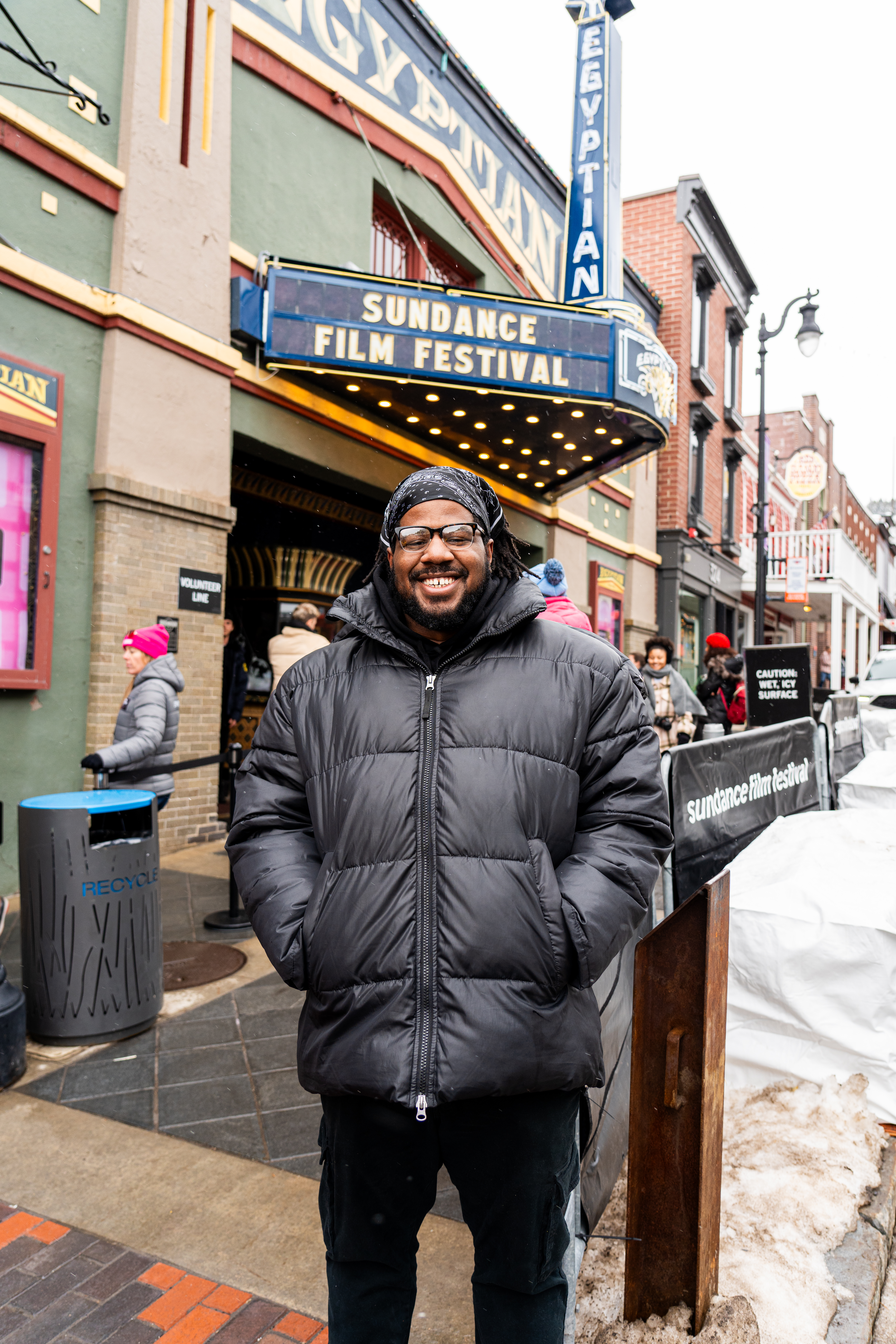
Premiering The Chimney Sweeper at Sundance carries particular meaning for Raese. It marks not only his first documentary, but his first time attending the festival at all. That this debut arrives during Sundance’s final year in Park City gives the moment added weight.
For Raese, the recognition is less about arrival and more about continuation.
“I’m just getting started,” he says.
What he hopes to leave behind as a filmmaker is not originality for its own sake, but contribution. A belief that stories endure not because they are new, but because they are told with care.
The Chimney Sweeper does exactly that. It observes. It listens. And it honors the quiet dignity of work passed down, one generation at a time.
The Chimney Sweeper screens as part of the Sundance Film Festival Documentary Shorts Program.
Kickin' It with Tyree


Comments